
It’s 12:45 a.m., and everybody is awake. No thieves are around. No thunder has frightened anyone out of sleep. No heavy rain is falling outside.
So why is everybody awake? It is the heat.
The fan is working, but it feels as though it is only blowing hot air. Pillows are soaked with sweat, and the room refuses to cool down. Someone takes a cold bath for relief, but within minutes the heat returns. By morning, the same question echoes through households across the city:
What once felt like an occasional discomfort is becoming a new reality. According to climate scientists and global weather agencies, rising temperatures are expected to continue shaping daily life for years to come.
Walking through Accra at noon can feel like walking beside a fire. Roads, buildings, and concrete surfaces absorb heat throughout the day and release it at night, making urban areas increasingly uncomfortable. At the same time, the loss of trees and green spaces has reduced the natural cooling systems that communities once depended on.
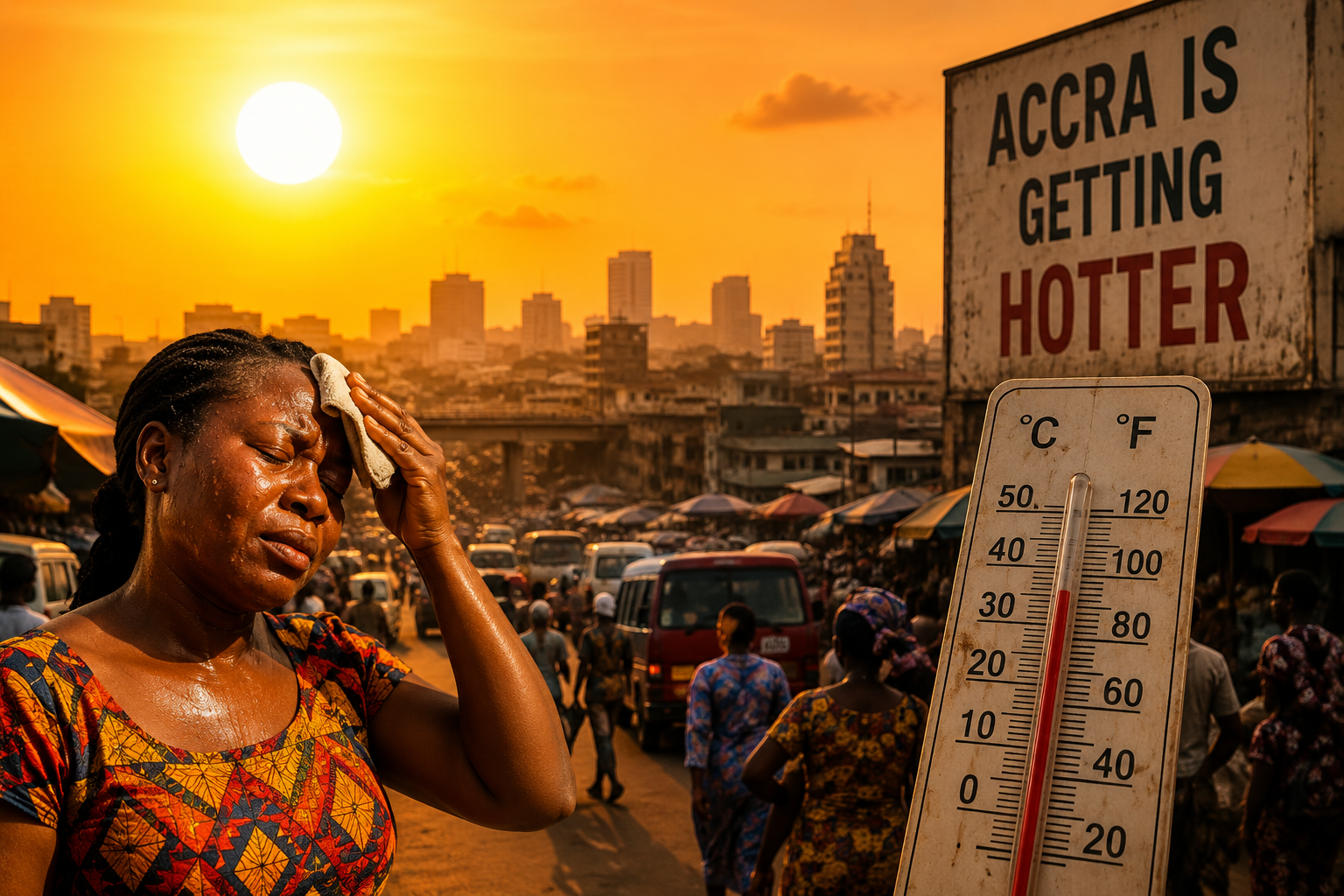
The effects of extreme heat are felt everywhere. Students struggle to concentrate in classrooms after sleepless nights. Market women spend long hours under the scorching sun. Farmers watch crops wither under prolonged heat stress, threatening livelihoods and food security.
Heat affects health, productivity, education, and overall well-being. For many people, there is no escape from it—in homes, public transport, workplaces, markets, and schools.
Yet there is hope. Communities can take action by protecting green spaces, planting trees, reducing deforestation, and promoting environmentally responsible practices. Trees absorb carbon dioxide, provide shade, and help reduce the warming effects that are becoming increasingly visible across our cities.
When the night feels too hot to rest, it is a reminder that climate change is no longer a distant issue. It is affecting our comfort, our health, and our daily lives. The question is no longer whether the climate is changing—it is how we choose to respond.